February 09, 2026 | Sensation Preserving Mastectomy
3 minute read

Over the past several decades, the treatment of breast cancer has advanced dramatically. For patients who require mastectomy, oncologic outcomes continue to improve, with many individuals achieving long-term remission and survival. Reconstructive options have progressed in parallel. Today, patients benefit from safer implant technologies, expanded autologous reconstruction techniques using their own tissue, and less invasive approaches that position tissue or implants above the chest wall muscles for faster recovery and reduced discomfort.
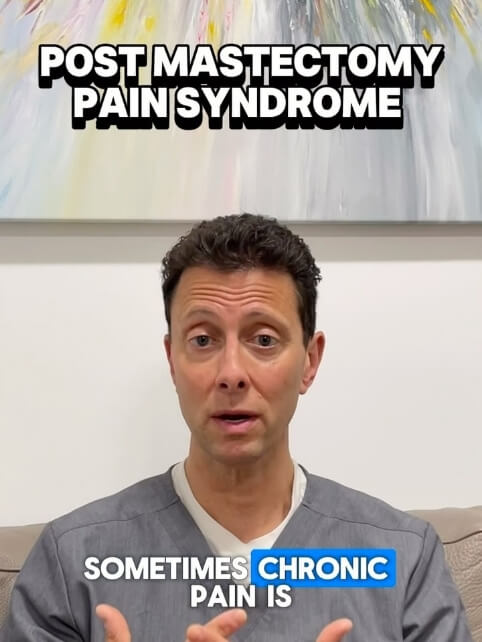
Despite these advances, one critical aspect of recovery has historically been overlooked: sensation. Following mastectomy, most patients experience numbness of the chest skin and nipple–areolar complex because the sensory nerves that supply these areas are often removed en bloc (i.e., in one piece) with the breast tissue. When these nerves are divided, the consequences extend beyond loss of feeling. Abnormal nerve regeneration can lead to chronic neuropathic pain, and post-mastectomy pain syndrome has been reported in up to 68% of patients in some studies. Yet many individuals are never counseled about these sensory changes, often because the long-standing assumption has been that nothing can be done to prevent them.
We now know that this is not the case.
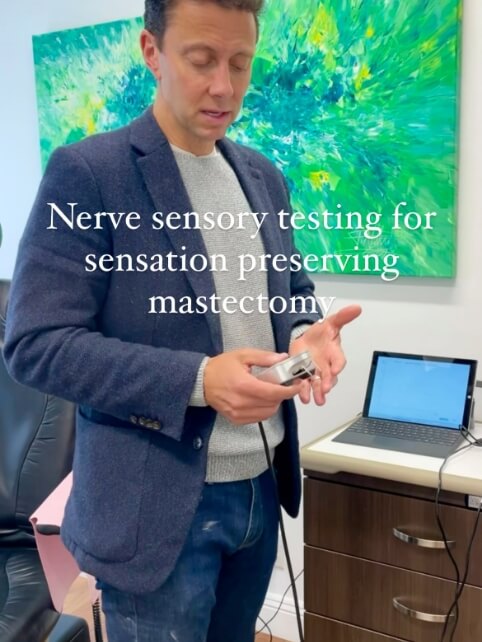
In 2019, we first described the Sensation-Preserving Mastectomy, demonstrating that key sensory nerves can often be identified, preserved, or reconstructed to the nipple–areolar complex and surrounding skin with meaningful restoration of sensation. A subsequent study in 2023 confirmed these findings in a larger cohort using more rigorous outcome measures. Since then, we have trained numerous plastic and breast surgery teams in this technique with the goal of making sensation preservation a routine component of mastectomy care.
For patients facing mastectomy, discussing options to preserve or restore sensation should be part of the treatment conversation. Sensory restoration is not merely a technical refinement-it can profoundly affect quality of life, body image, and emotional recovery. Many of our patients share that they no longer feel constantly reminded of their diagnosis or treatment, and that they feel whole rather than altered. This distinction reflects something important: the difference between simply surviving and truly thriving.
- Peled, Anne Warren MD, Peled, Ziv M. MD. Nerve Preservation and Allografting for Sensory Innervation Following Immediate Implant Breast Reconstruction. Plastic & Reconstructive Surgery-Global Open 2019; 7(7):p e2332
- Peled, Anne Warren MD, von Eyben, Rie PhD, Peled, Ziv M. MD. Sensory Outcomes after Neurotization in Nipple-sparing Mastectomy and Implant-based Breast Reconstruction. Plastic & Reconstructive Surgery-Global Open 2023;11(12:) e5437
Learn More About Treatment with Dr. Ziv Peled
If you would like to learn more about your treatment options, please fill out our contact form to request a consultation. You can also call our office at (415) 751-0583 to speak with our team and schedule an appointment.